Mobile + ML inference
StudyAI
AI-native iOS study companion for live lecture capture
Built an iOS study companion that turns in-class live notes and voice capture into structured summaries and machine-generated quizzes, powered by Meta's BART seq2seq model on a FastAPI inference layer with offline-first Firestore and Core Data sync.
- Role
- Solo Developer
- Timeframe
- May 2025
- Status
- Not shipped (iOS prototype)
- Links
- Video demo
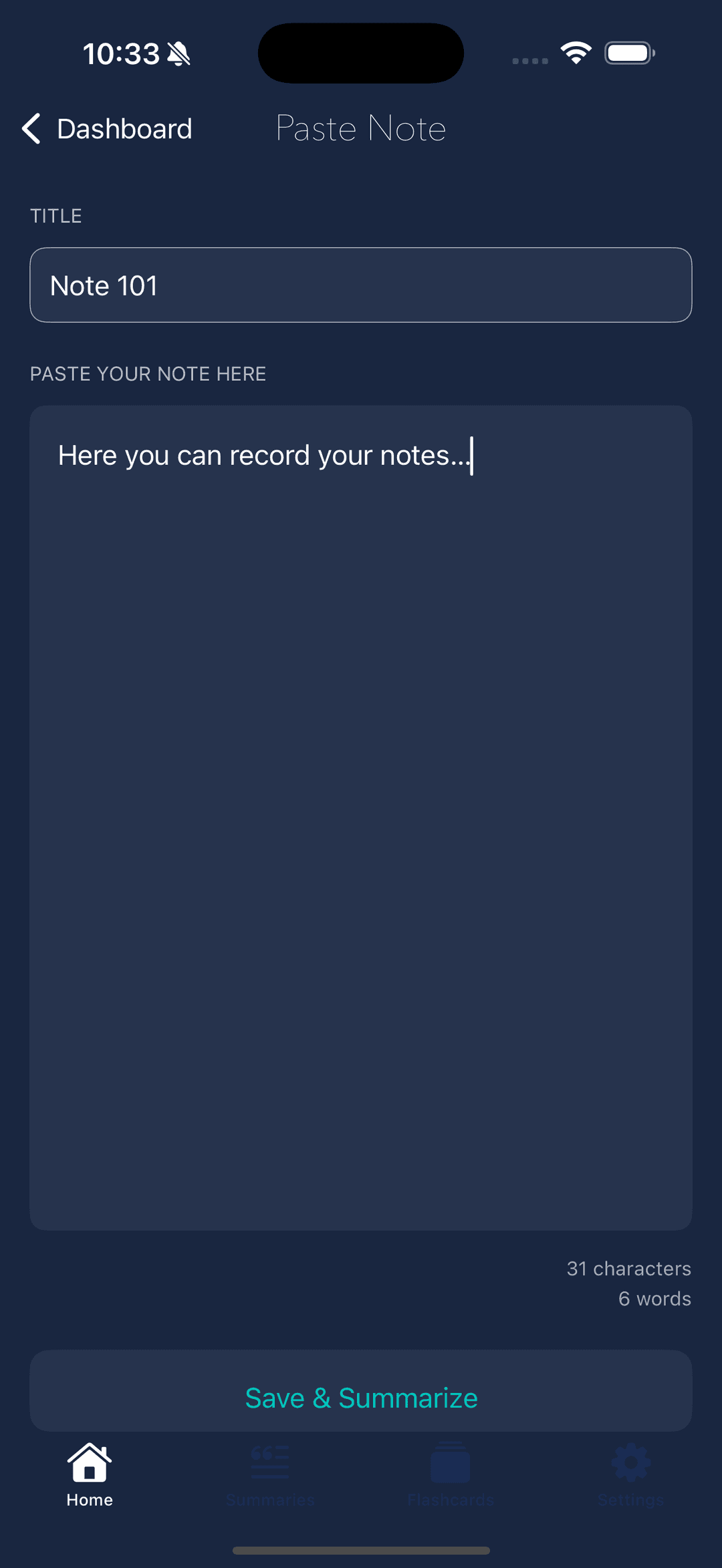
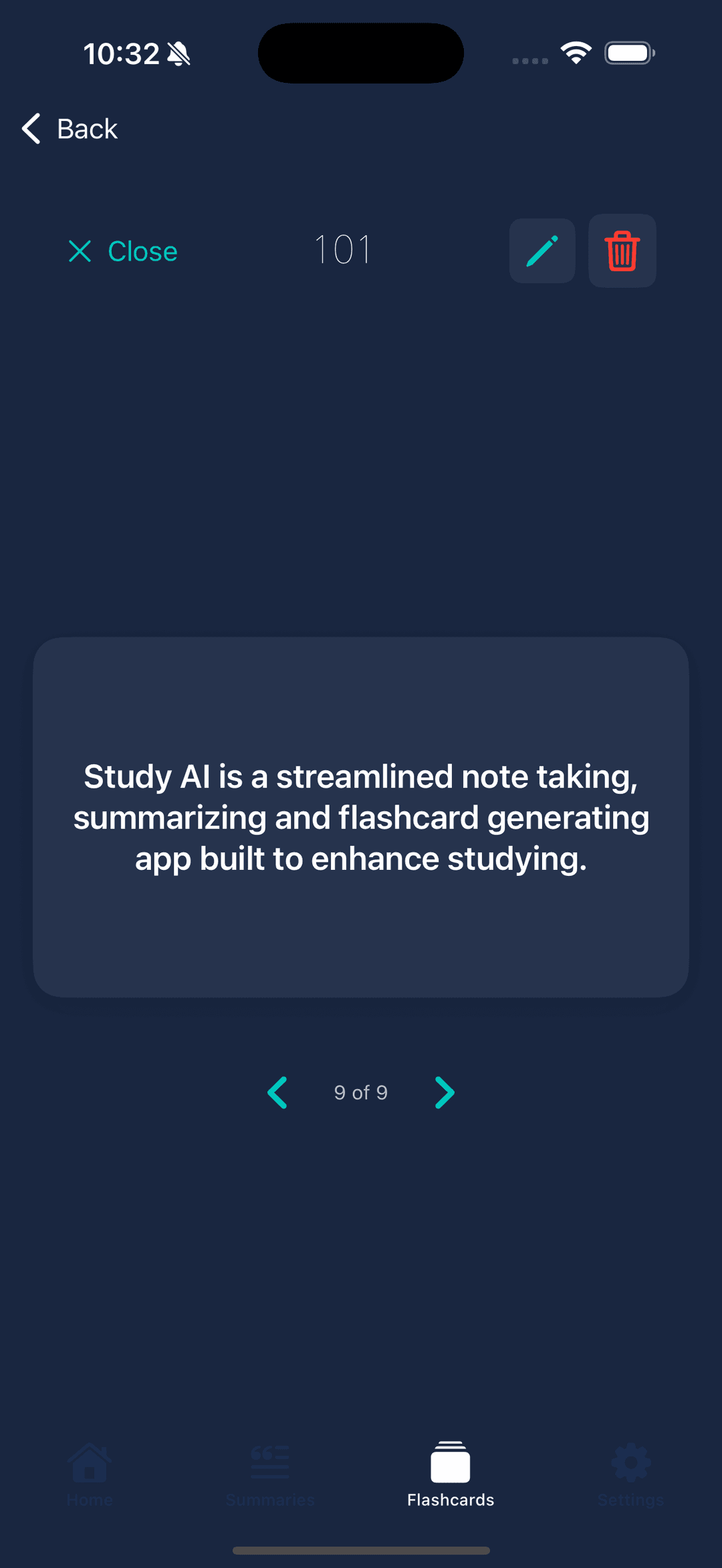
Product screenshots
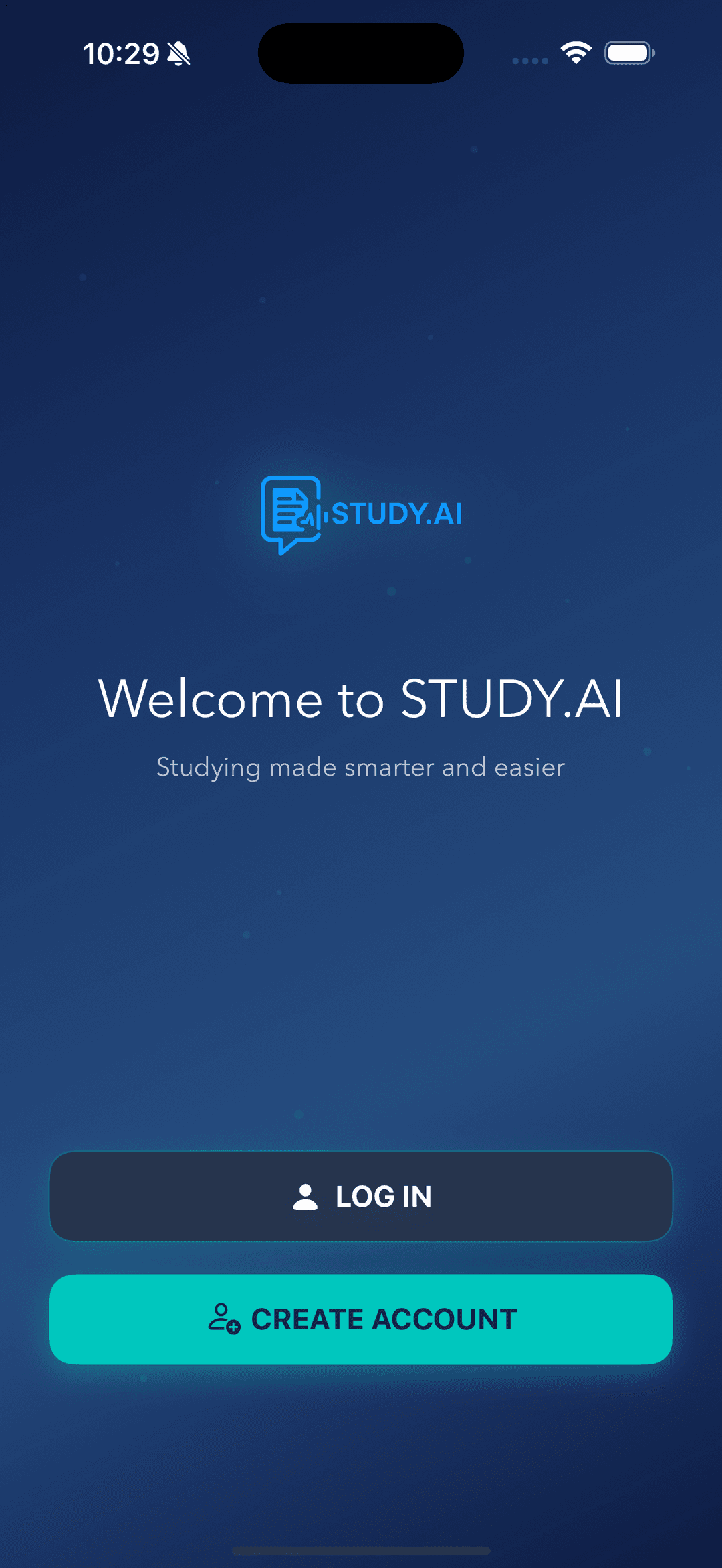
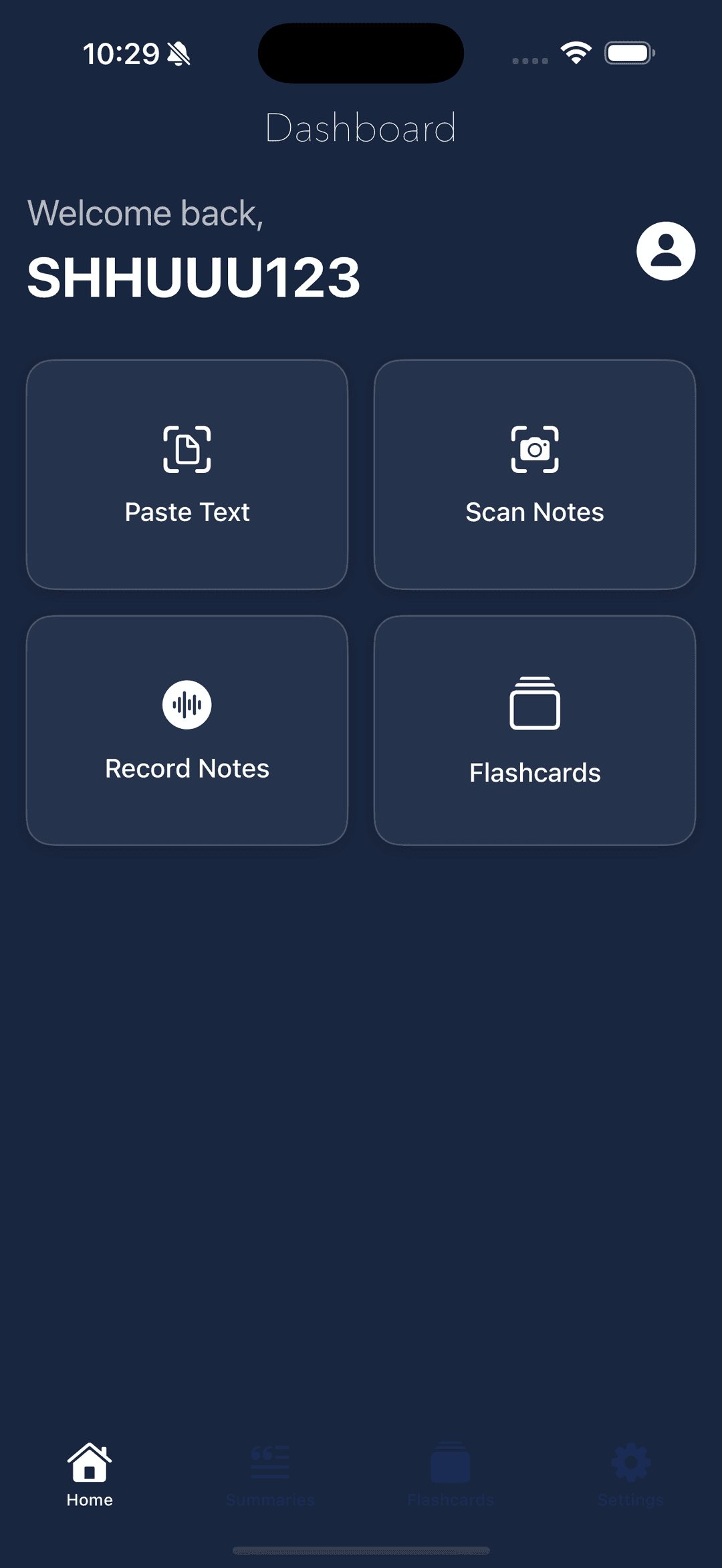
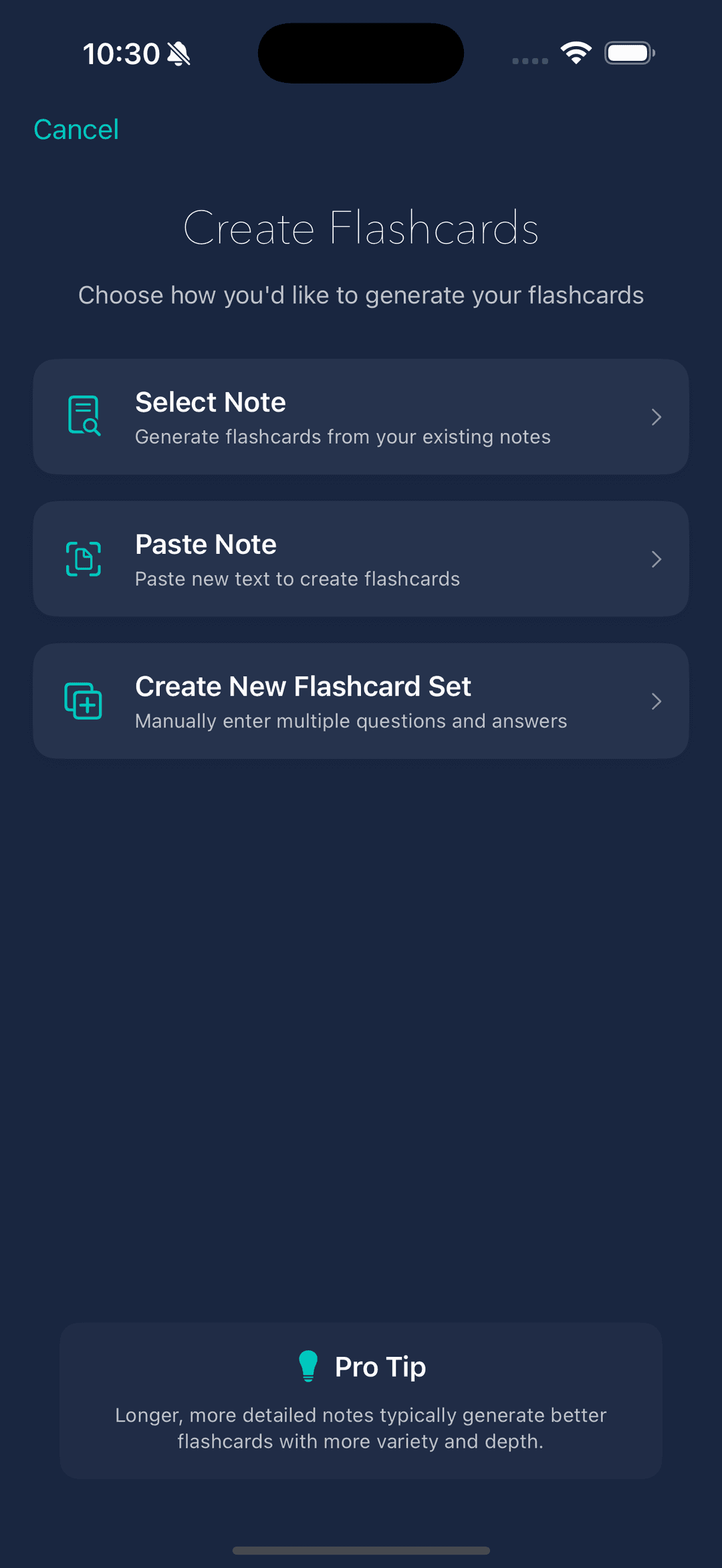
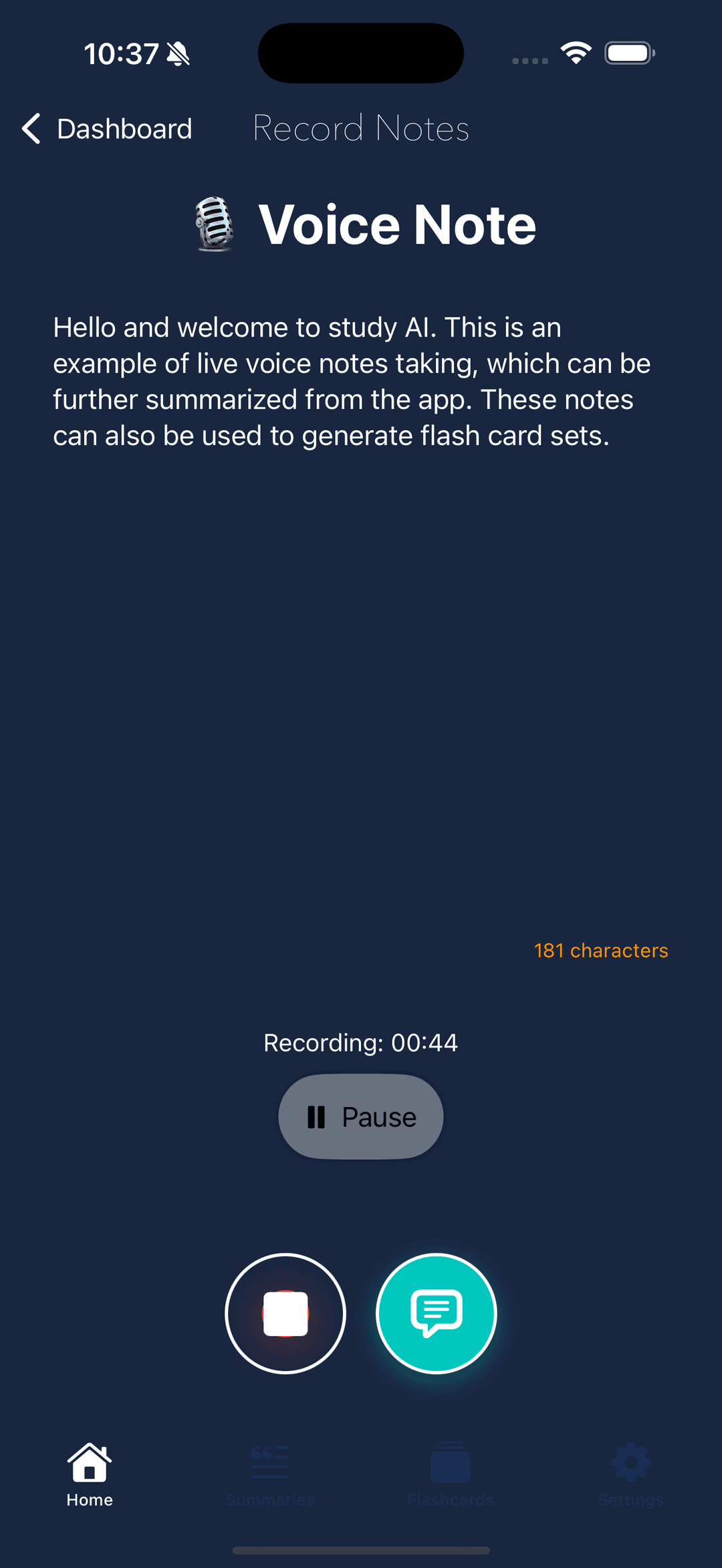
Context and problem
Students struggle to convert raw lecture capture—live notes, voice memos, and unstructured material—into review-ready summaries and formative quizzes fast enough to reinforce learning while content is still fresh.
Challenge
Close the gap between live lecture delivery and effective self-review by converting unstructured in-class input into retention-ready summaries and assessments on a mobile-first, latency-sensitive path.
Constraints
- Mobile-first UX with intermittent campus connectivity—offline access required for post-lecture review
- Inference latency must stay low enough for interactive study sessions during and after class
- Quiz quality depends on summarization fidelity from noisy, real-time speech and note input
Key contributions
- Built in-class live note capture with speech-to-text ingestion, streaming lecture content into the processing pipeline without disrupting session flow.
- Deployed Meta BART (`facebook/bart-large-cnn`) for abstractive summarization and quiz-item generation—producing study briefs and formative assessment prompts grounded in captured material.
- Architected an offline-first SwiftUI client with Firestore + Core Data dual persistence and a FastAPI layer targeting p95 inference latency under 400ms.
Architecture
- Step 1SwiftUI iOS clientLive note capture, voice input, quiz/flashcard UI
- Step 2FastAPI inference serviceBART summarization and quiz-generation pipelines
- Step 3Firestore + Core DataReal-time sync with offline-first local persistence
Key engineering decisions
- Selected Meta BART (`facebook/bart-large-cnn`) for bounded seq2seq summarization and text generation instead of open-ended LLM calls—better cost and latency control for structured study outputs
- Kept live capture lightweight on-device while delegating summarization and quiz synthesis to the backend inference path
- Used dual-layer persistence (Firestore + Core Data) so students can review generated material without continuous network access
Security and reliability
- Offline-first sync for note and quiz access across intermittent campus connectivity
- Optimized inference paths with p95 response times under 400ms for interactive study workflows
Outcome
Built an iOS study companion prototype that turns in-class live notes and voice capture into BART-powered summaries and auto-generated quizzes—structured review material from raw lecture input in a single mobile workflow.
Limitations
- Not shipped; iOS prototype only—no App Store release
- Quiz quality varies with speech recognition accuracy and lecture audio conditions
- Model scope limited to summarization and generation—no multimodal or long-document RAG pipeline
Next steps
- Add retrieval grounding for course materials (syllabi, slides) to improve quiz relevance
- Expand evaluation harnesses for summary and quiz quality across subject domains
Tech stack
- SwiftUI
- FastAPI
- BART (facebook/bart-large-cnn)
- Firebase
- Firestore
- Core Data
- Speech-to-text